
.svg)


How Landscaping Improves Curb Appeal Without Overdoing It
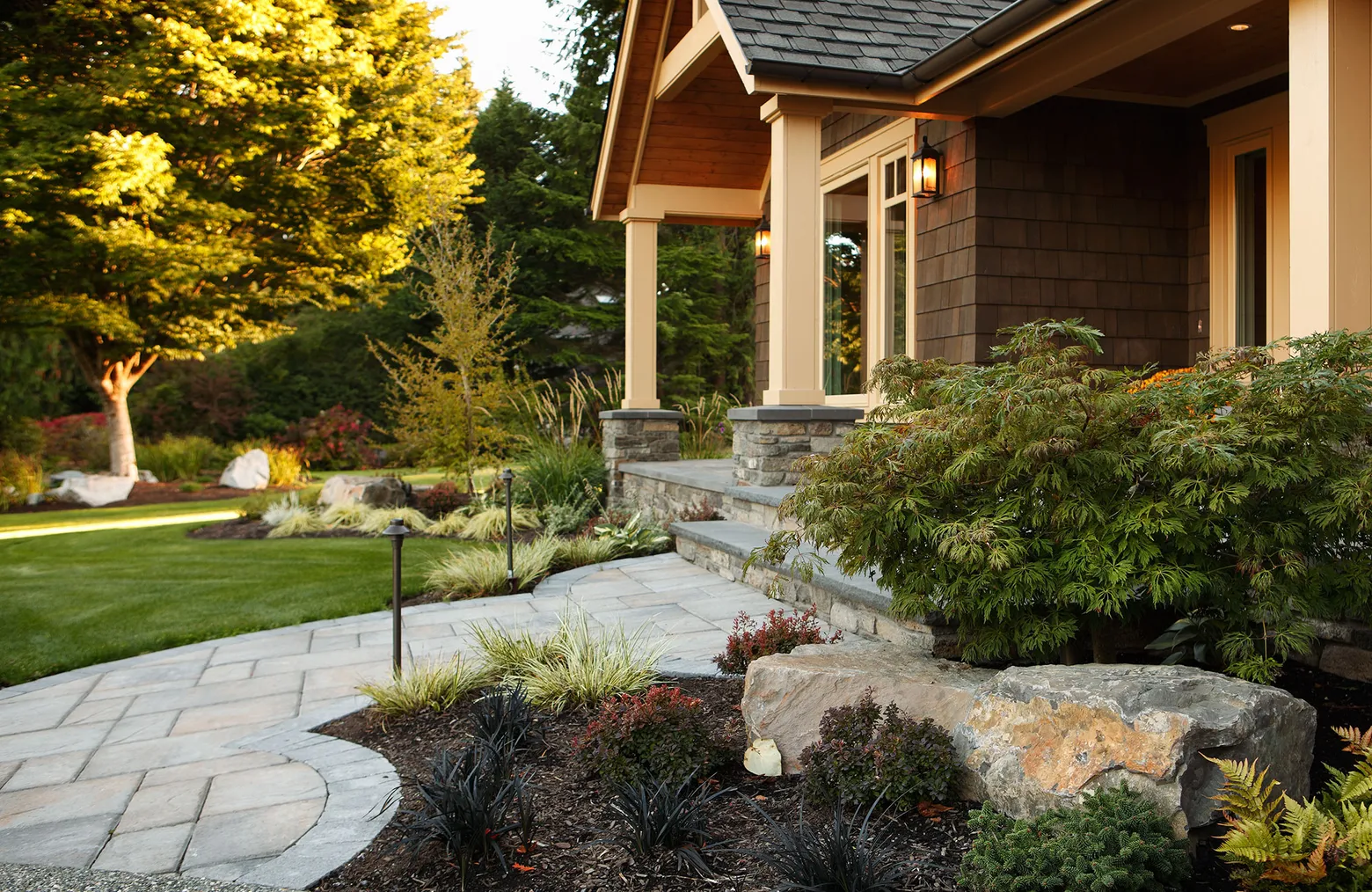
Curb appeal shapes first impressions long before someone steps inside. That’s why searches for curb appeal landscaping are so common. A home’s exterior sends signals about care, quality, and value in just seconds.
Good curb appeal feels inviting—not overwhelming.
More Landscaping Doesn’t Always Mean Better Curb Appeal
One of the biggest misconceptions is that adding more plants automatically improves curb appeal. In reality, cluttered landscaping often has the opposite effect.
Effective curb appeal focuses on:
- Clean lines
- Balanced plant placement
- Visual clarity
Professional landscaping emphasizes intention over excess.
Layout Is the Foundation of Curb Appeal
Before plants or materials are chosen, layout matters most. Walkways, entry paths, and transitions guide how the home is experienced.
Landscape design improves curb appeal by:
- Directing attention to the entry
- Creating symmetry and balance
- Making the approach feel welcoming
Good layout sets the tone.
Plant Selection Should Support the Home’s Style
Plants should complement the architecture, not compete with it. Mismatched styles or oversized plants can distract from the home itself.
Professional landscaping selects plants that:
- Fit the home’s scale
- Enhance rather than hide features
- Mature gracefully
Subtlety creates elegance.
Defined Edges Instantly Improve Appearance
Clean edges between lawn, beds, and walkways make a home look polished. Undefined borders create visual noise.
Edging and structure:
- Improve organization
- Reduce maintenance
- Sharpen visual appeal
Small details make a big impact.
Hardscapes Strengthen the First Impression
Hardscapes like walkways and driveways play a major role in curb appeal. Cracked or awkward paths weaken the overall look.
Well-designed hardscapes:
- Improve accessibility
- Create clean transitions
- Anchor the landscape
Structure adds confidence.
Lighting Enhances Curb Appeal After Dark
Curb appeal doesn’t stop at sunset. Landscape lighting highlights key features and improves safety.
Lighting helps:
- Emphasize entry points
- Add depth and contrast
- Make the home visible at night
Subtle lighting feels upscale.
Avoiding Overplanting Keeps the Look Clean
Overplanting quickly leads to overcrowding and constant trimming. Simpler planting schemes age better.
Professional landscaping plans for:
- Mature plant size
- Proper spacing
- Long-term balance
Restraint improves longevity.
Consistency Creates a Finished Look
Using too many materials or plant types can make a landscape feel chaotic. Consistency ties everything together.
Landscape design uses:
- Repeated textures
- Limited color palettes
- Cohesive materials
Consistency creates harmony.
Low-Maintenance Designs Protect Curb Appeal
Curb appeal fades quickly if maintenance is difficult. Low-maintenance design keeps the landscape looking good with less effort.
Professional landscaping focuses on:
- Durable materials
- Simplified layouts
- Easy-care plantings
Ease supports long-term beauty.
Why Professional Landscaping Gets Curb Appeal Right
Professional landscapers understand how to balance design, scale, and simplicity. They know what draws the eye—and what distracts it.
Professional landscaping services help:
- Improve first impressions
- Avoid cluttered designs
- Create timeless curb appeal
Experience makes the difference.
Curb Appeal Should Feel Effortless
The best curb appeal looks natural and intentional—not forced. When landscaping is done right, it quietly elevates the entire property.

If you want to enhance curb appeal without overdoing it, professional landscaping can create a clean, welcoming exterior that lasts.
Contact Bayscapes today to schedule a free consultation and explore curb appeal landscaping solutions designed for balance, beauty, and long-term impact.

