
.svg)


Where to Place Landscape Lighting for the Best Results
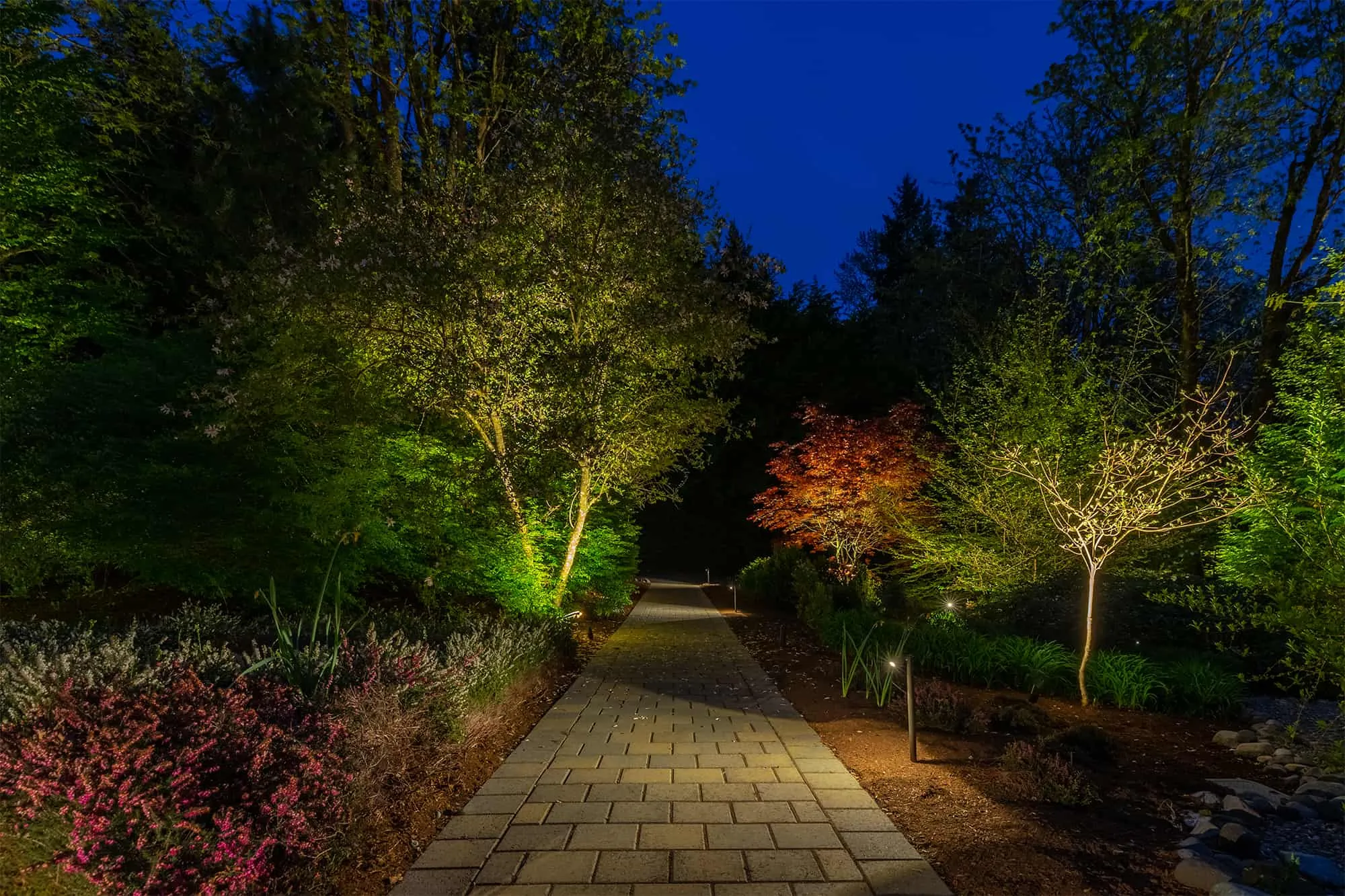
Landscape lighting can enhance a yard—or completely miss the mark. That’s why searches for landscape lighting placement are so common. Without proper placement, lights can create glare, shadows, or uneven illumination.
Placement determines performance.
Start With Safety-Critical Areas
The first priority of lighting placement should always be safety.
Key safety zones include:
- Walkways and paths
- Steps and elevation changes
- Entry points
Proper lighting prevents accidents.
Highlight Key Features, Not Everything
Good lighting focuses attention on important features rather than flooding the entire yard.
Features worth highlighting include:
- Architectural elements
- Trees or focal plants
- Hardscape features
Selective lighting creates depth.
Avoid Direct Glare
Lights should never shine directly into eyes, windows, or seating areas.
Professional placement:
- Uses angled fixtures
- Controls beam spread
- Reduces visual discomfort
Comfort matters as much as brightness.
Create Layers of Light
Effective lighting uses multiple layers instead of one bright source.
Layered lighting includes:
- Path lighting
- Accent lighting
- Ambient lighting
Layers create balance and interest.
Spacing Affects Visual Balance
Lights placed too close together can feel harsh, while lights too far apart leave dark gaps.
Balanced spacing:
- Creates rhythm
- Maintains even coverage
- Avoids overlighting
Spacing shapes the experience.
Consider How the Landscape Will Grow
Plant growth changes how light behaves over time.
Professional landscaping anticipates:
- Mature plant size
- Seasonal changes
- Potential obstructions
Planning avoids future adjustments.
Lighting Placement Should Match the Yard’s Layout
Lighting works best when it follows natural movement through the space.
Good placement supports:
- Flow between areas
- Defined routes
- Natural transitions
Lighting guides movement.
Use Lighting to Define Outdoor Living Areas
Lighting helps define where activities happen after dark.
Defined areas include:
- Seating spaces
- Dining areas
- Gathering zones
Definition improves usability.
Don’t Forget Vertical Elements
Lighting vertical features adds depth and dimension.
Vertical lighting highlights:
- Trees
- Walls
- Screens
Height improves visual interest.
Lighting Placement Should Support Privacy
Proper lighting can enhance privacy by illuminating screens or boundary features.
Lighting placement can:
- Maintain depth
- Prevent dark corners
- Improve comfort
Privacy doesn’t disappear at night.
Why DIY Lighting Placement Often Falls Short
DIY lighting often focuses on fixture quantity rather than strategic placement.
Professional landscaping avoids:
- Random layouts
- Uneven brightness
- Awkward shadows
Experience improves outcomes.
Why Professional Landscaping Delivers Better Lighting Results
Professional landscapers design lighting systems based on how the yard is used—not just where fixtures fit.
Professional landscaping services help:
- Identify optimal placement
- Balance brightness and ambiance
- Ensure long-term performance
Expert planning maximizes value.
Good Placement Makes Lighting Feel Natural
When lighting is placed correctly, it feels effortless—not forced.
The best lighting blends into the landscape.

Contact Bayscapes today to schedule a free consultation and explore landscape lighting placement solutions designed for beauty, balance, and long-term performance.

